
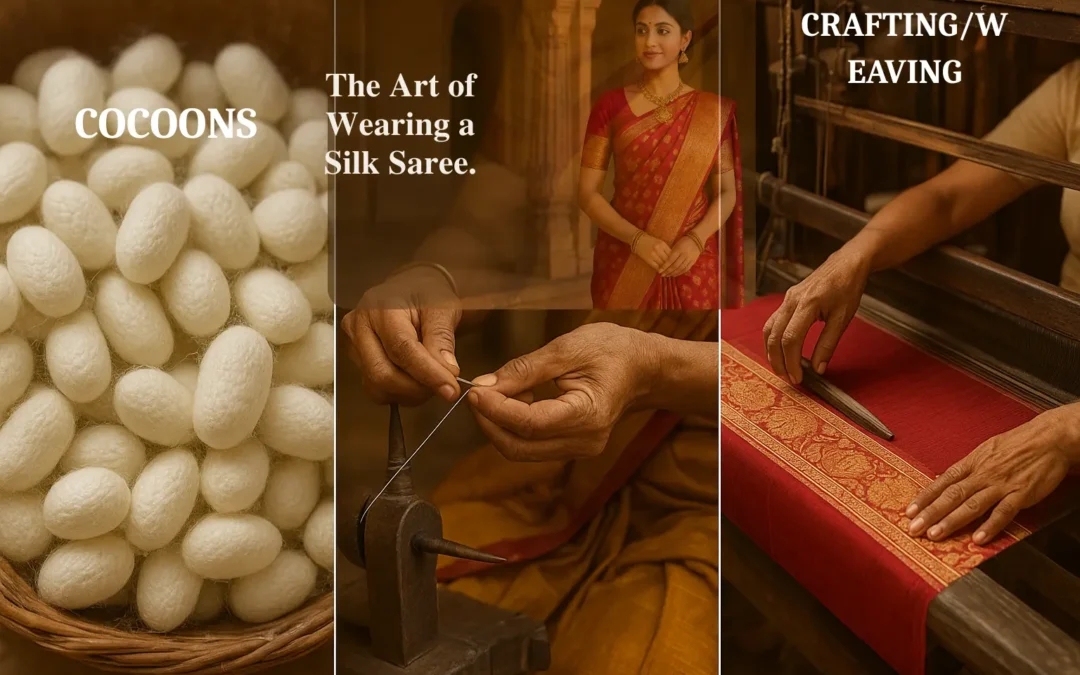
The making of a silk saree is a journey that begins in nature and ends in a masterpiece of art. It all starts with silkworms, which feed on mulberry leaves and spin fine cocoons. These cocoons are carefully harvested to extract raw silk threads. The shimmering fibers are then dyed in vibrant colors using age-old techniques.
Once dyed, the silk threads are wound onto spindles and set up on looms. Here begins the meticulous process of weaving. Skilled artisans, often from families who have preserved this craft for generations, bring designs to life through handlooms. Depending on the intricacy, a single saree may take weeks or even months to complete.
The motifs woven into sarees are deeply symbolic. Peacocks, lotuses, paisleys, and temple borders often find their way into the fabric. In a Kanjeevaram saree, for example, the pallu is often woven separately and then attached with great precision, ensuring durability and finesse.
What makes each silk saree special is the blend of artistry and patience. Every thread represents countless hours of dedication, making each saree unique. From cocoon to couture, the journey of silk is nothing short of magical—a legacy that celebrates both tradition and artistry.
