
ABOUT SJT
Fifty five beautiful years of draping women in sarees
Whether it’s getting into the mood of the moment or letting people capture the essence of a beautifully draped saree, SJ Textiles offers you a delightfully rich collection of both traditional and fashionable silk sarees that are sure to catch your eye.
With three well-appointed showrooms located at KIADB Industrial Area, & NL Belgaum, Karnataka, our showrooms are a truly exclusive affair with a regalia of SJ Silks carefully selected by Mrs. Shalini Chopra, the daughter of Mr. Gershon Kumar Chopra.
With an ethic of creating the right traditional atmosphere for you to shop through our entire range of SJ Silks at leisure, our showroom also allows you to get personal attention to make your choices.
Come and discover the true flavor of the south with SJ Silks With Kancheepuram Silks and make a fashion statement on every occasion.
As we continue our journey of fifty-five glorious years, SJ Textiles remains dedicated to innovating while honoring tradition. Our sarees have become a trusted choice for brides, professionals, and fashion enthusiasts who seek authenticity with a modern touch.
Step into the world of SJ Silks—where every drape tells a tale, every weave reflects heritage, and every saree becomes a symbol of your style and sophistication.
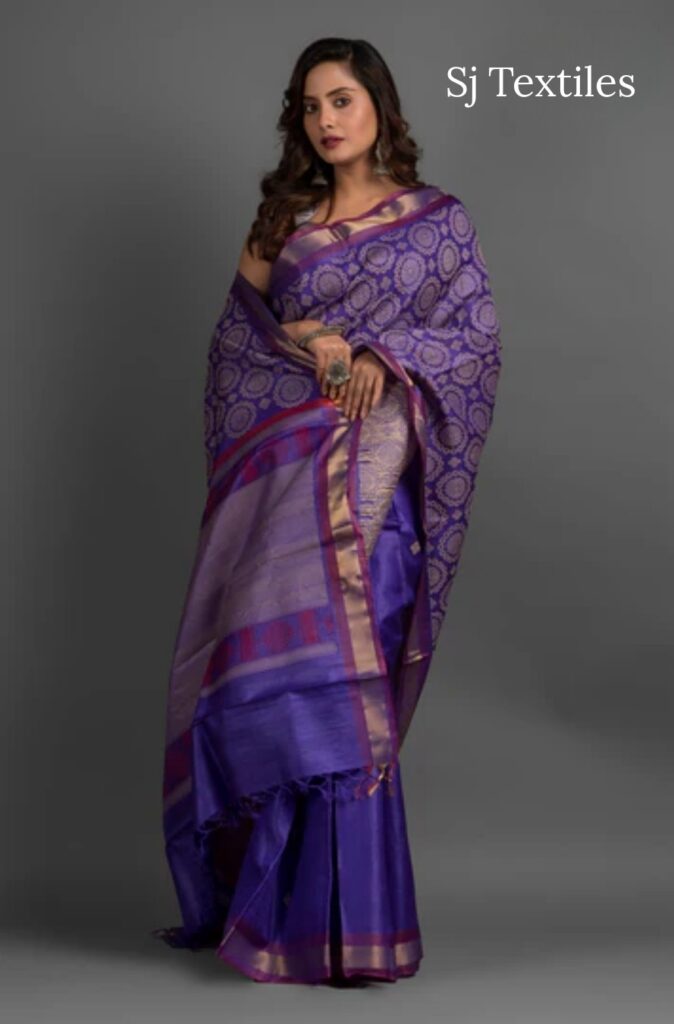
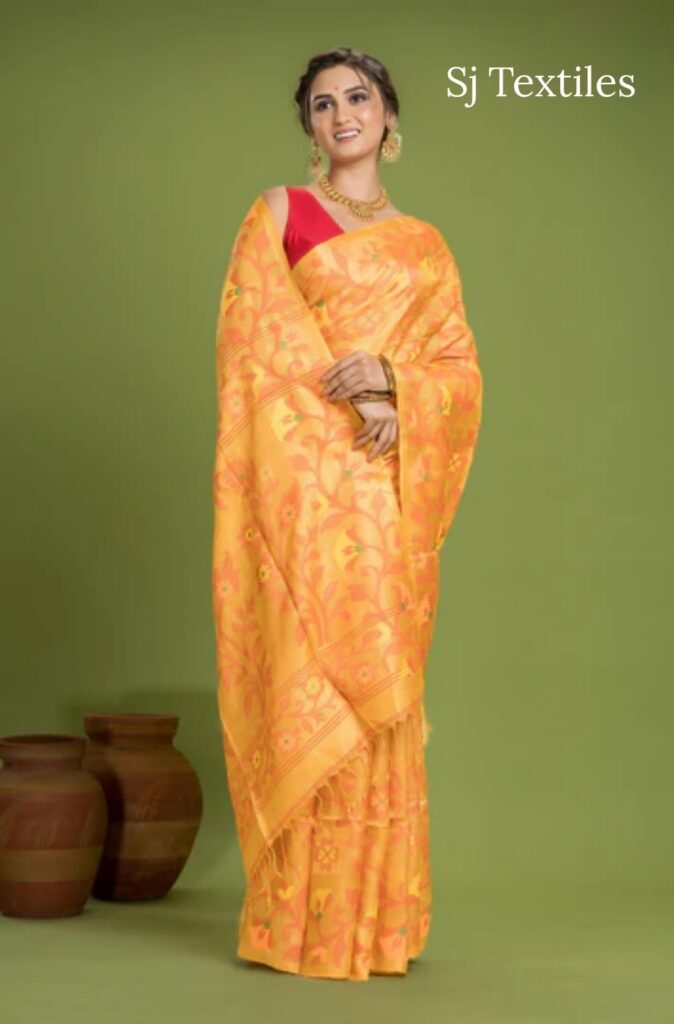
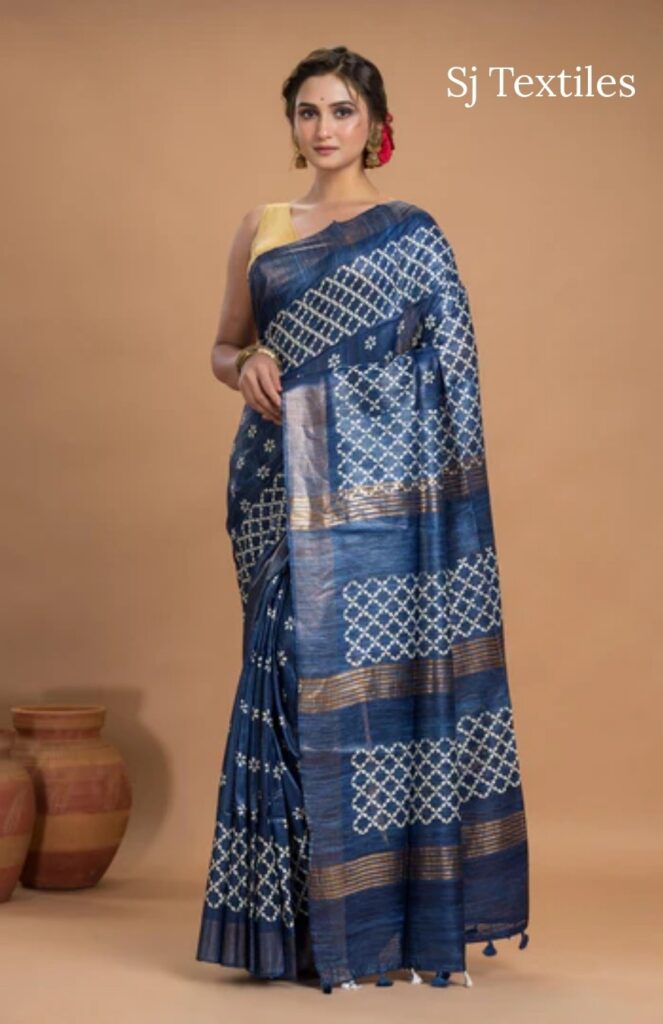
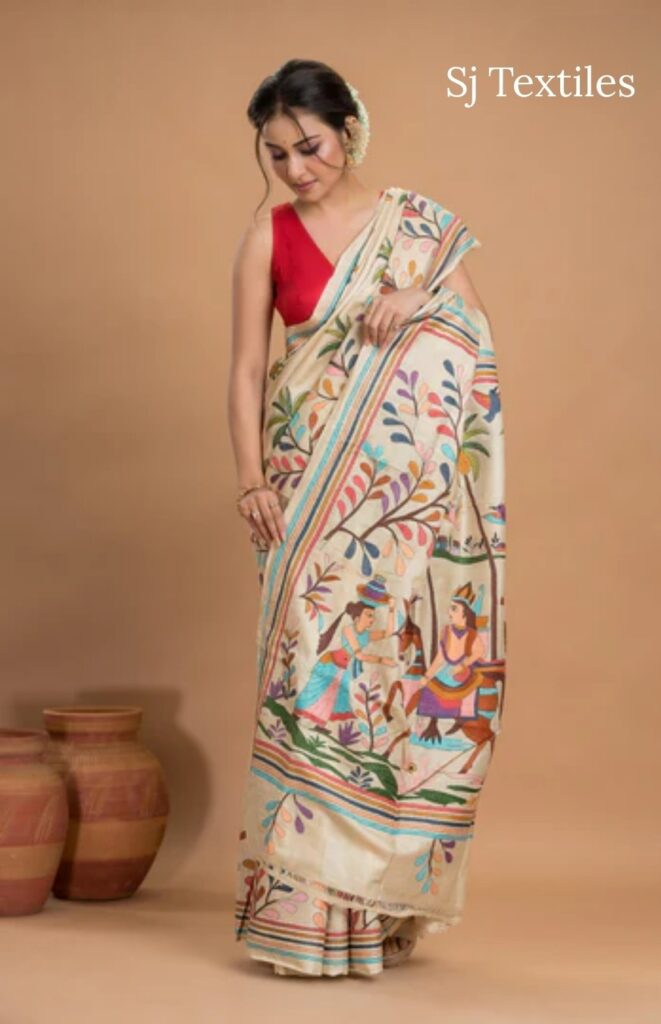
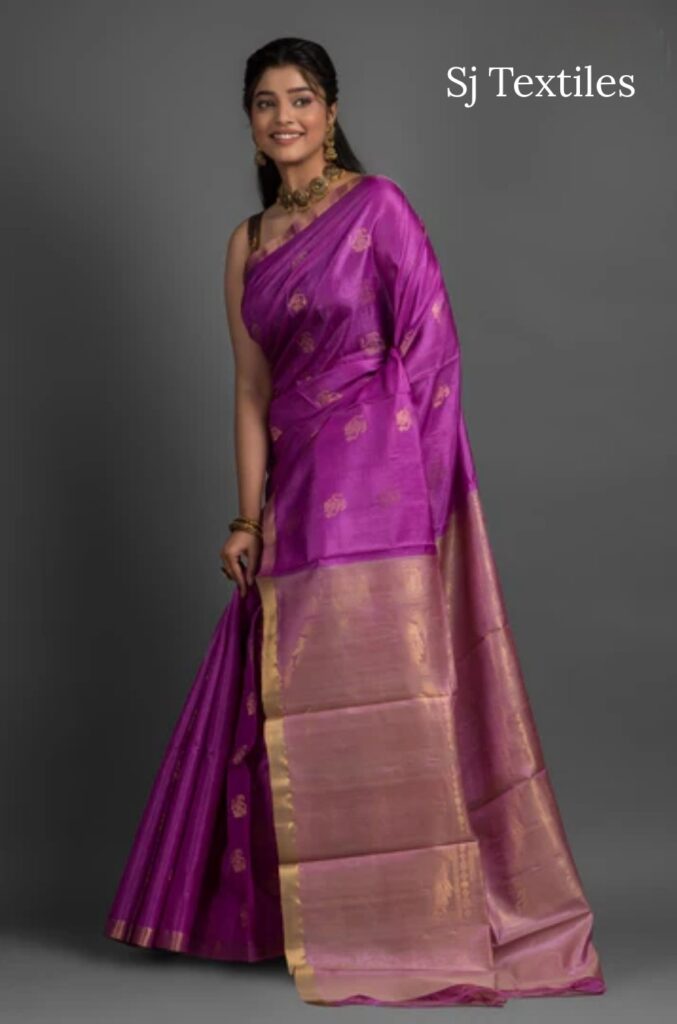
Mrs. Shalini Chopra, daughter of the renowned textile merchant Mr. Gershon Kumar Chopra, founded SJ Textiles in 1985. Two decades ago, Kanchipuram silk sarees were reserved only for one occasion – weddings. Every young girl tended to own only one silk saree which would be worn on her wedding day. It is this thought Mrs. Shalini Chopra challenged. She believed SJ Silks & kanchipuram are malleable to fit into any occasion and not just as bridal wear. This thought became the foundation of SJ Textiles.
Mrs. Shalini Chopra started four lines of SJ Silks – Casual Silks, Designer Silks, Bridal Silks, and Concept Silks. This shook the industry as a whole as SJ Silks were revered as the most premium silk of India. Mrs. Shalini preserved the sanctity of the fabric and experimented only in designs and colours. However, over time she realized that young women found it difficult to wear Kanjeevaram Silks frequently. since silk sarees carry a certain amount of weight. Mrs. Shalini worked with her master weaver over a year to change the texture of silk without compromising on quality.
Hence, SJT birthed the biggest revolution ever done in silk – SJT Lightweight Kanjeevarams.
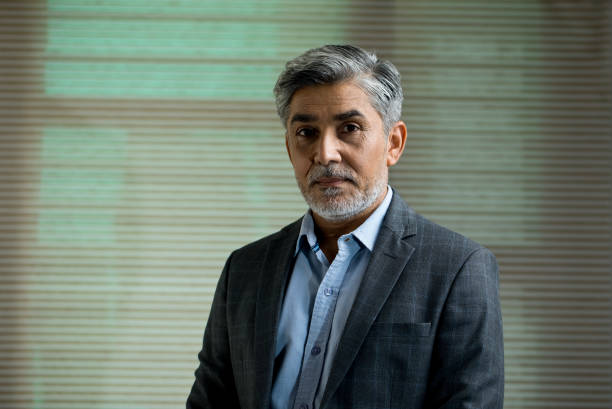
FOUNDER OF SJ TEXTILES
Mr. GERSHON KUMAR CHOPRA
FOUNDER OF SJ TEXTILES
A Serialing Traditional Saree Fashon Show At Karnataka
Earlier, brands tended to introduce new colours and designs for every Diwali and the same designs would be repeated through the year. Ms Jeyasree once again broke this myth about SJT and established the “One of Each” design concept. Kanjeeavarams were seen in new designs and colours everytime a customer made a visit. She grouped the signature creations and conceptualized a collection for the same which led to SJT pathbreaking fashion shows. The first brand that stylised Kanjeevarams on a ramp – The Silkline.
Silkline, our yearly fashion shows, displayed 10 silk sarees under each line at SJ Textile – Casual Kanjeevarams, Designer Kanjeevarams, Bridal Kannjeevarams and Concept Kanjeevarams. The faces behind these creations, the weavers, were honoured on stage by her father Mr.GERSHON KUMAR CHOPRA.
It’s a Most Specified Poster
Design Of Our Silk House
A Traditional Wearing Of Silk Saree Audition Of the Pan-India Exclaration Over the different styles & Combinations Within the Augmn.
Over the years, Mrs. Shalini Chopra, has experimented, innovated and challenged the norms that were attached to silk sarees. Whether it came to revolutionising the design templates by introducing modern concepts like silver zari, copper zari and the most celebrated collection – Corporate Pattu, or by flaunting silk sarees to young women through fashion shows, she has paved the path for SJ Silks Kanjeevarams to evolve into the Queen of all Indian Fabrics.
Mrs. Shalini Chopra unveiled contemporary designs launched under NAVA and Folklore Collection at the Vogue Wedding Show from 2017–2019, the first for a South Indian brand to achieve this feat. Preceded by collaborations in 2013 and 2014 with New Year, Mrs. Shalini has always ensured that SJ Textiles is the fashionable face of silk. Moreover, Business personalities and NRIs decked up in the finest of SJ Silks – Kanjeevarams on the silver screen was truly a milestone moment in SJ Textiles’ journey.
Silk Marked- Sign of Purity.
Here are about some New Modellings in Our Industry that are been developed with Hand-Crafted meanings with the help of Silk Shuttles.
Shalini Chopra sculpted the brand to cater to the millenials and Gen-Z. She has been relatable to the youngest saree patrons and is findly called “Princess of Silk” in our Pan-Location. She has won numerous awards for her contributions in the silk industry.
innovation has always gone hand in hand with tradition. In recent years, our artisans have begun developing new modellings in saree design that carry hand-crafted meanings, adding deeper value to every weave. These unique creations are made possible through the delicate yet powerful art of weaving with silk shuttles, a craft that requires precision, patience, and creativity.
Every saree that emerges from our looms tells a story. The motifs aren’t just patterns; they symbolize culture, heritage, and emotions. From geometric inspirations that reflect modern design philosophies to nature-inspired motifs like blooming lotuses and flowing rivers, each weave brings a fresh perspective while staying rooted in tradition.
Our new line of handcrafted modellings is a bridge between timeless artistry and contemporary fashion. By using silk shuttles, our master weavers ensure that every saree carries an unmatched texture and finish that cannot be replicated by machines. These designs celebrate individuality—making each saree a statement piece, not just a garment.
Here’s Our New Modellings Collection :
✨ Heritage Line
Inspired by centuries-old weaving traditions, this line brings back classic motifs reimagined with modern finesse. Perfect for women who value authenticity with elegance.
✨ Modern Motifs
Geometric patterns, abstract inspirations, and bold color contrasts—this series is for the new-age woman who wants her silk saree to make a statement beyond tradition.
✨ Lightweight Classics
Crafted with fine silk shuttles and perfected by our master weavers, these sarees combine comfort with grandeur—making silks easy to wear for any occasion.
✨ Corporate Silks
An innovative range designed for professionals, blending subtle elegance with contemporary style. These sarees give women the confidence to carry silk effortlessly into boardrooms and events.
✨ Festive Shimmers
Infused with handcrafted zari in silver, copper, and gold, these sarees celebrate light, color, and joy—ideal for weddings, festivities, and family gatherings.
✨ Signature Concepts
A limited-edition line where every saree is an artistic experiment, weaving together stories, motifs, and hand-crafted meaning. Each piece is truly one-of-a-kind.
SOME NEW SINTERENIEAN STYLING BOTIQUE MODELS
Here’s The Story of SJ Boutiques :
For over five decades, SJ Boutique & Textiles has carried forward a legacy of weaving tradition into timeless fashion. Founded by Mrs. Shalini Chopra, daughter of Mr. Gershon Kumar Chopra, the brand was born from a vision to redefine how women experience silk sarees. What once was reserved only for weddings has now evolved into an expression of elegance for every occasion—thanks to the innovation and courage that shaped SJ Silks.
From the very beginning, Mrs. Shalini believed silk was not just a fabric, but a canvas for creativity. By introducing collections like Casual Silks, Designer Silks, Bridal Silks, and Concept Silks, she reimagined the way sarees were draped, worn, and celebrated. Her journey did not stop there—she went on to pioneer the Lightweight SJ Silks, blending traditional weaving techniques with modern comfort, allowing women of all ages to embrace silk effortlessly.
But the story of SJ Boutique & Textiles is not just about innovation—it is about celebrating women. Whether it’s a young professional draping a saree for a corporate event, a bride walking into a new chapter of her life, or a grandmother passing down an heirloom saree, SJ Silks – Kanjeevarams have become a part of countless personal stories across generations.
But Today, SJ Boutique & Textiles is more than a store—it is an experience, a legacy, and a promise to drape women in elegance for every occasion.
HISTORY OF SILK

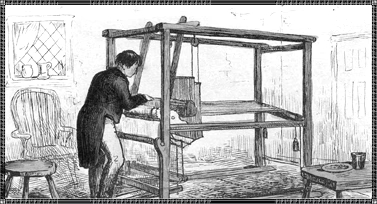
How silk was discovered:
According to the 27th century BC tale, the discovery of silk was an accident. It stated that Empress Leizu was having tea one day when a silk worm’s cocoon fell into her cup.In its attempt to get out, the thread of the cocoon began to unroll. So the Empress thought of weaving the thread. The Yellow Emperor, encouraged his wife to study the life of silk worm, and so she learned the art of raising silk worms or what is called sericulture. Her entourage was taught as well and thus the advent of the silk industry.
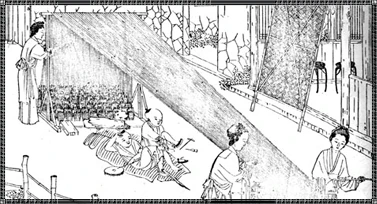
The history of silk in China:
Silk is one of the oldest fabrics known to man. The history of silk can be traced back to the 27th century BC in China where the use of silk was limited to the Chinese. The Chinese used silk for clothing, writing and during the Tang Dynasty, the colour of the silk you wear signified one’s social rank class.
The Silk Route:
For a very long time, the Chinese kept silk as a secret from the rest of the world. Only in the last half of the first millennium BC the Silk Road or Silk Routes were opened across Asia, linking Mediterranean world as well as North Africa and Europe. At first countries such as India and Japan learnt the science of sericulture and soon joined in on the eastern monopoly of silk production.
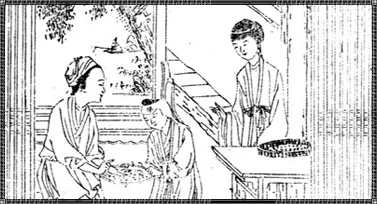
Silk in India:
Traders introduced Chinese silk cloth to India, mainly from Samarkand and Bukhara and it gained immense popularity among the royalty and the aristocracy. Jamawar as well as brocade weaving centers in India developed in holy cities and trade centers because of the demand for expensive fabrics by the royal families and temples.
The ancient centers were situated mainly in Gujarat, Malwa and South India.
In the North – Delhi, Lahore, Agra, FatehpurSikri, Varanasi, Mau, Azamgarh and Murshidabad were the main centers for brocade weaving
The most well known Jamawar weaving centers were in Assam, Gujrat, Malwa and South India
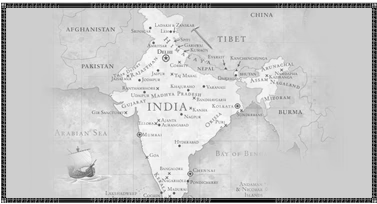
Silk in present India:
Silk in the Indian subcontinent is a luxury good. About 97% of raw silk is produced in the five Indian states of Karnataka, Andhra Pradesh, Tamil Nadu, West Bengal and Jammu and Kashmir. The North Bangalore regions of Muddenahalli and Kanivenarayanapura and Mysore contribute to a majority of silk production. Another emerging silk producer is Tamil Nadu where mulberry cultivation is concentrated in Coimbatore, Erode and Dharmapuri districts. Hyderabad (Andhra Pradesh) and Gobichettipalayam (Tamil Nadu) were the first locations to have automated silk reeling units.
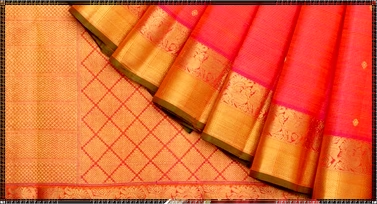
Main Frame Varieties in silk :

From the past, Kanchipuram silk sarees stand out from others due to its intricate weaving patterns and the quality of the silk. They are large and heavy owing to the zari work on the saree. Kanchipuram attracts large number of people, both from India and abroad, who come specifically to buy silk sarees. Most of the sarees are still hand woven by workers in the weaving unit. More than 5000 families still indulge in silk weaving.
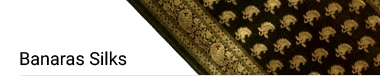
Banaras silk has always been a big textile center of silk weaving. The earliest mention of the brocade and Zari textiles of Banaras is found in the 19th century. With the migration of silk weavers from Gujarat during the famine of 1603, silk brocade weaving started in Banaras in the seventeenth century and developed in excellence during the 18th and 19th century.

Assam silk denotes the three major types of indigenous wild silks produced in Assam-golden Muga, white Pat and warm Eri silk. The Assam silk industry, now centered in Sualkuchi, is a labor intensive industry.
