
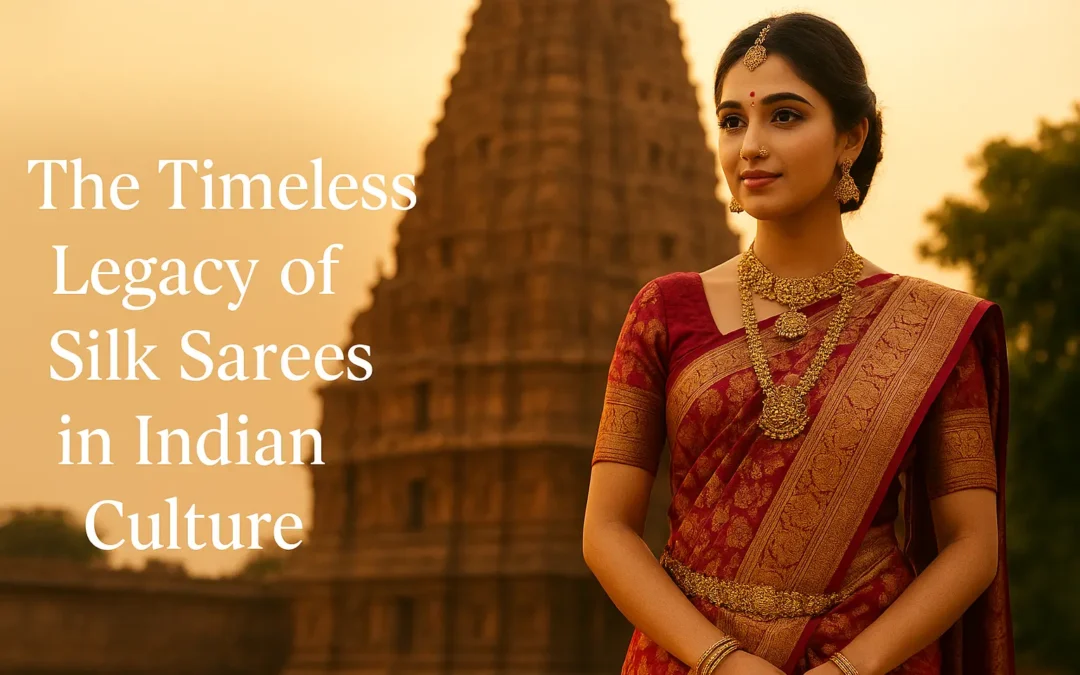
Silk sarees hold an unshakable place in India’s cultural and traditional identity. They are not merely garments but embodiments of centuries-old craftsmanship, heritage, and rituals. Each region in India has developed its own weaving tradition, creating masterpieces like Banarasi, Kanjeevaram, Paithani, and Patola. These sarees are not just fabric; they are woven legacies.
A Banarasi silk saree, for instance, reflects Mughal artistry with intricate floral and jaal motifs, while Kanjeevaram sarees mirror temple architecture through bold designs and contrasting borders. Paithani sarees from Maharashtra are celebrated for their peacock and floral pallus, while Assam’s Muga silk symbolizes purity and elegance.
Wearing silk during weddings and festivals is considered auspicious. The golden zari threads often signify prosperity and blessings. Families cherish sarees as heirlooms, passing them from generation to generation, preserving emotions and history within their folds.
Today, silk sarees have gone beyond national boundaries, winning admiration across the world. Be it a wedding in the U.S. or a festival in Singapore, Indian brides proudly adorn silk sarees, embracing their roots with pride. In a fast-changing fashion landscape, silk sarees stand tall as timeless treasures, blending heritage with modern elegance.
